WhatsApp: +852 9290 8038
Wechat: +86 158 1713 9717
WhatsApp: +852 9290 8038
Wechat: +86 158 1713 9717
September. 21, 2026
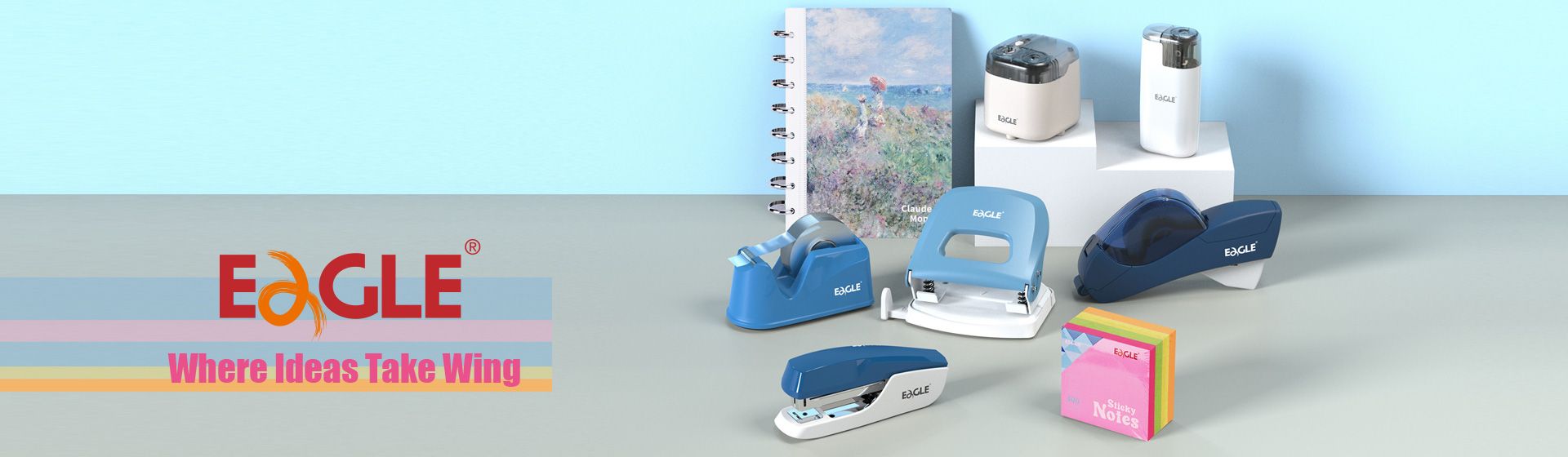
If you are comparing office fastening solutions for bindery, packaging, print finishing, or warehouse documentation, the safest way to choose the right model is to start with real workload data, then match sheet capacity, staple leg length, throat depth, and duty cycle to your application. In this Heavy Duty Stapler Buying Guide: How to Choose the Right Capacity, we will walk through a practical, stage-based method that works for first-time buyers and procurement teams alike: define your stapling volume, verify paper stack thickness, select the correct staple specification, and check quality benchmarks such as ASTM- and DIN-based testing, tolerances, and cycle life. As a professional Staplers Manufacturer, EAGLE focuses on repeatable performance, 100% inspection, and precision-controlled production to help users avoid jams, under-driving, and premature wear. For reference, product visuals and technical details can be reviewed here: //www.EAGLE-stationery.com/data/watermark/main/20250418/6801c75ee9081_.jpeg.
When buyers focus only on price, they often end up with a stapler that looks robust but cannot handle the actual stack height. In practice, the correct capacity is the foundation of reliable clinching force and consistent penetration.
We recommend evaluating capacity in three layers:
Sheet count
Material density
Usage frequency
For example, a general office team may only need a mid-capacity desktop model, while a print shop, logistics department, or carton closure line needs a heavy-duty unit engineered for repetitive cycles. That is why Heavy Duty Stapler Buying Guide: How to Choose the Right Capacity is not just about numbers on a label; it is about matching mechanism design to application reality.
Before selecting a model, I always recommend measuring the thickest stack you staple in daily work, not the average stack.
Use this simple method:
A precise workflow helps prevent underspecification. In professional purchasing, we often compare sample bundles against the manufacturer’s rated capacity and test penetration consistency to a precision of 0.01 mm in key dimensional checks. This level of control matters because even a small variation in staple leg formation can cause poor clinch quality.
If your stack regularly exceeds the stapler’s rated output, choose the next capacity tier. This is the simplest way to reduce jamming and driver plate wear.
Capacity and staple size must be evaluated together. A high-capacity stapler is only effective if the staple leg length matches the stack thickness.
Here is a practical reference table:
| Stack Thickness | Recommended Staple Leg Length | Typical Use Case |
|---|---|---|
| 2–10 sheets | 6 mm | Light office paperwork |
| 10–20 sheets | 8 mm | Daily reports, forms |
| 20–40 sheets | 10 mm | Manuals, packet assembly |
| 40–70 sheets | 12 mm | Thick files, catalogs |
| 70+ sheets | Heavy-duty long-leg staple | Industrial or specialty fastening |
Important considerations:
In our experience as a Staplers Manufacturer, the most common buyer mistake is selecting a strong chassis but ignoring staple specification. The result is incomplete fastening, staple buckling, or misfeed.
Once capacity is determined, the next stage is mechanical ergonomics.
Duty cycle describes how many cycles the stapler can perform before overheating, loosening, or losing alignment. For procurement teams, this is a critical operational KPI.
Look for:
Throat depth determines how far into a sheet bundle the staple can be placed. If you bind booklets, reports, or center-fold packets, throat depth is essential.
A good heavy-duty stapler should multiply hand force efficiently. That means less effort per staple, especially at higher stack counts.
A practical buying rule:
This is where Heavy Duty Stapler Buying Guide: How to Choose the Right Capacity becomes a real purchasing framework instead of a simple product search.
Trustworthy suppliers should not rely on vague claims like “strong” or “durable.” I look for measurable indicators and test documentation.
Ask whether the product has been assessed under relevant standards such as:
For quality control, strong suppliers often use:
At EAGLE, this type of process discipline helps ensure stable fastening force and consistent staple exit geometry. When a supplier can explain their test protocol in clear terms, buyers can evaluate risk much more accurately.
Different environments require different tools. A stapler for a front office is not the same as one used in a shipping department or print finishing line.
Selecting by scenario is one of the most practical parts of Heavy Duty Stapler Buying Guide: How to Choose the Right Capacity, because it prevents overbuying and underperformance at the same time.
| Your Need | Best Focus | What to Avoid |
|---|---|---|
| 10–20 sheets daily | Compact reliability | Oversized industrial models |
| 20–40 sheets frequently | Mid-heavy capacity | Low-duty desktop staplers |
| 40–70 sheets repeatedly | Reinforced mechanism | Thin-frame economy products |
| 70+ sheets or specialty tasks | Industrial-grade performance | Generic office staplers |
If you are unsure, I recommend choosing one level above your current average workload. That extra margin usually pays off through lower jam rates and longer service life.
One of our customers, a 12-person print finishing team, was using a standard office stapler for 35–45 sheet packets. The result was frequent staple jams, inconsistent clinch quality, and wasted operator time.
We helped them re-specify the tool based on actual stack measurements and weekly cycle volume. After switching to a higher-capacity EAGLE heavy-duty model with the correct staple leg length:
The key lesson was simple: the issue was not operator technique; it was capacity mismatch. This kind of result is exactly why Heavy Duty Stapler Buying Guide: How to Choose the Right Capacity should begin with usage analysis rather than product appearance.
Possible causes:
Solutions:
Possible causes:
Solutions:
Possible causes:
Solutions:
Possible causes:
Solutions:
To make the selection process easier, I suggest using these tools:
You can also review product imagery and technical presentation here for reference: //www.eagle-stationery.com/data/watermark/main/20250418/6801c75ee9081_.jpeg.
For procurement teams, I also recommend requesting:
This helps you compare vendors on total value, not just purchase price.
As a professional Staplers Manufacturer, EAGLE focuses on product consistency, operational reliability, and export-ready quality control. Our production workflow is built around measurable standards, from dimensional verification to final functional checks.
What buyers typically value most:
When a buyer follows the logic in Heavy Duty Stapler Buying Guide: How to Choose the Right Capacity, the result is usually fewer rejects, fewer jams, and better long-term value.
Before you confirm your purchase, I recommend checking the following:
If all nine points align, you are very likely choosing the right model.
The best heavy-duty stapler is not simply the strongest one on paper; it is the one that matches your actual stack thickness, usage frequency, staple specification, and quality expectations. In this Heavy Duty Stapler Buying Guide: How to Choose the Right Capacity, we have shown a complete selection path: measure your workload, match staple leg length, verify duty cycle, inspect quality standards, and validate the supplier’s support system. As EAGLE continues to serve global buyers as a trusted Staplers Manufacturer, our recommendation is simple: choose with measurable data, confirm standards, and test the product against your real application before scaling up. If you follow these steps thoroughly, you will reduce jams, improve fastening consistency, and make a smarter long-term purchasing decision.
LATEST NEWS
September. 21, 2026
Heavy Duty Stapler Buying Guide: How to Choose the Right Capacity
If you are comparing office fastening solutions for bindery, packaging, print finishing, or warehouse documentation, the safest way to choose the right model is to start with real workload data, then match sheet capacity, staple leg length, throat depth, and duty cycle to your application. In this Heavy Duty Stapler Buying Guide: How to Choose the Right Capacity, we will walk through a practical,
September. 18, 2026
Rechargeable vs Battery-Operated Pencil Sharpeners: Which Is Better?
Choosing between a rechargeable pencil sharpener and a battery-operated pencil sharpener sounds simple until you actually have to solve a daily problem: a classroom with 25 pencils to sharpen before first period, an office desk that has no power outlet nearby, or a travel art kit that must stay light and reliable. Parents usually ask, “Which one sharpens cleaner?” Teachers ask, “Which one
September. 08, 2026
Why Does My Hole Punch Jam and How Can You Prevent It?
When a hole punch starts jamming, it is rarely just a small office nuisance. It is usually a sign of mechanical overload, worn cutting dies, misaligned punch heads, or waste-chip buildup that is disrupting the tool’s cutting cycle. If ignored, the problem can escalate from intermittent sticking to blade deformation, incomplete perforation, and eventually total tool failure. In a business
CONTACT INFORMATION
+86 852 2750 1188
+86 158 1713 9717
Unit 201 Kwong Sang Hong Centre, 151-153 Hoi Bun Road, Kwun Tong, Kowloon, Hong Kong
Navigation